Cellular domains play vital roles in a wide range of cellular functions. Defining cellular domains and understanding the molecular basis of their formation is essential to the study of cell functionality. This authoritative reference provides the most comprehensive analysis available on cellular domains, with emphasis on the definition and molecular composition of the domain as well as the functional implications of domain organization.
Abstract: Voltage-sensor domains couple membrane potential to conformational changes in voltage-gated ion channels and phosphatases. Highly coevolved acidic and aromatic side chains assist the transfer of cationic side chains across the transmembrane electric field during voltage sensing. We investigated the functional contribution of negative electrostatic potentials from these residues to channel gating and voltage sensing with unnatural amino acid mutagenesis, electrophysiology, voltage-clamp fluorometry and ab initio calculations. The data show that neutralization of two conserved acidic side chains in transmembrane segments S2 and S3, namely Glu293 and Asp316 in Shaker potassium channels, has little functional effect on conductance-voltage relationships, although Glu293 appears to catalyze S4 movement. Our results suggest that neither Glu293 nor Asp316 engages in electrostatic state–dependent charge-charge interactions with S4, likely because they occupy, and possibly help create, a water-filled vestibule.
Congratulations to the 8 LSI Post Doctoral Fellows that are recipients of the 2011 Michael Smith Foundation for Health Research (MSFHR) Research Trainee Awards.
Recipients include:
Dr. Rafi Chapanian
“A novel cell surface engineering methods for universal red blood done cells via combination of enzymatic cleavage and polymer grafting”
Supervisors: Dr. Jayachandran Kizhakkedathu & Dr. Donald Brooks
Dr. Nirupa Goel
“Serotonergic mechanisms underlying sex differences in stress neuroendocrine function”
Supervisor: Dr. Victor Viau
Dr. Mohammad Mahdi Karimi
“Analysis of the influence of retroelements on activation of oncogenes in primary human lymphomas using high-throughput sequencing”
Supervisors: Dr. Matthew Lorincz & Dr. Dixie Mager
Dr. Daniel Patton
“Il7R signalling in lymphocyte development and function”
Supervisor: Dr. Ninan Abraham
Dr. Stephen Pless
“Investigating anti-arrhythmic inhibition of voltage-gated sodium channels with unnatural amino acids and fluorescence spectroscopy”
Supervisor: Dr. Christopher Ahern
Dr. Solmaz Sobhanifar
“Elucidation of the antibiotic resistance mechanisms of BlaR1 and MecR1 through structural, biochemical and cellular investigation using cell-free protein expression”
Supervisor: Dr. Natalie Strynadka
“Proteolytic signatures and networks in breast cancer metastases”
Supervisor: Dr. Christopher Overall
Jointly funded with Breast Cancer Society of Canada
LSI Alumni funded:
Dr. Kevin Bin Liang Lin
“The role of the Ahi-1 oncogene in the regulation of hematopoietic stem cell development, function, and leukemogenesis”
PhD Supervisor: Dr. Michael Gold, UBC Department of Microbiology and Immunology
Now at the BC Cancer Agency – Terry Fox Laboratory
Supervisor: Dr. Xiaoyan Jiang
Dr. Jacqueline Lai
“The use of CpG aduvants, bio-degradable microparticles, and microneedle technology for the design of novel single-dose vaccines”
PhD Supervisor: Dr. Pauline Johnson, UBC Department of Microbiology & Immunology
Current Supervisor: Dr. Jan Dutz
Complete listing of recipients is available on the MSFHR website.
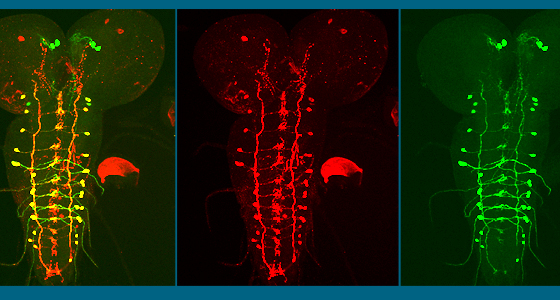
Abstract: Retrograde BMP signaling in neurons plays conserved roles in synaptic efficacy and subtype-specific gene expression. However, a role for retrograde BMP signaling in the behavioral output of neuronal networks has not been established. Insect development proceeds through a series of stages punctuated by ecdysis, a complex patterned behavior coordinated by a dedicated neuronal network. In Drosophila, larval ecdysis sheds the old cuticle between larval stages, and pupal ecdysis everts the head and appendages to their adult external position during metamorphosis. Here, we found that mutants of the type II BMP receptor wit exhibited a defect in the timing of larval ecdysis and in the completion of pupal ecdysis. These phenotypes largely recapitulate those previously observed upon ablation of CCAP neurons, an integral subset of the ecdysis neuronal network. Here, we establish that retrograde BMP signaling in only the efferent subset of CCAP neurons (CCAP-ENs) is required to cell-autonomously upregulate expression of the peptide hormones CCAP, Mip and Bursicon β. In wit mutants, restoration of wit exclusively in CCAP neurons significantly rescued peptide hormone expression and ecdysis phenotypes. Moreover, combinatorial restoration of peptide hormone expression in CCAP neurons in witmutants also significantly rescued wit ecdysis phenotypes. Collectively, our data demonstrate a novel role for retrograde BMP signaling in maintaining the behavioral output of a neuronal network and uncover the underlying cellular and gene regulatory substrates.
Dr. Jayachandran Kizhakkedathu, Centre for Blood Research, Department of Pathology and Laboratory Medicine, Dr. Calvin Yip, Diabetes Research Group, Department of Biochemistry and Molecular Biology, and Dr. Catherine Van Raamsdonk, Molecular Epigenetics Research Group, Department of Medical Genetics, have each received Michael Smith Foundation for Health Research Career Investigator awards.
“MSFHR’s Career Investigator Program builds research capacity in BC by supporting the establishment, development and retention of new and mid-career investigators. Since 2001, MSFHR has allocated more than $80 million in funding to more than 300 Career Investigator award recipients.”
For a full list of award recipients, or to learn more about the MSFHR, please visit their website.
“With funding and support, Grand Challenges Canada will enable Canadian and developing-world scientists to introduce innovation and solve persistent global health problems. Grand Challenges Canada is committed to unlocking the potential of developing-world scientists – working with their Canadian counterparts to tackle health challenges and contribute to lasting solutions.”
Dr. Santiago Ramon is a Canadian Rising Star in Global Health
Centre for Tuberculosis Research (CTBR) researcher, Dr. Santiago Ramon, created a two minute video to call attention to TB and visually explain his synergistic approach to treating TB. Videos from researchers across Canada were viewable on the Grand Challenges Canada website for voting as part of the rigorous review process. Santiago was awarded one of nineteen $100,000 Canadian Rising Stars in Global Health grants.
Santiago obtained his Ph.D. degree at the University of Zaragoza in Spain. He also trained in Italy at the Universities of Pavia and Padova. His doctoral studies focused on the characterization of several intrinsic drug resistance systems in mycobacteria. Always concerned with the growing global problem of drug resistant strains of tuberculosis (TB), for which available therapies are very limited, he moved to UBC as a post-doctoral fellow to develop a TB drug discovery program. Santiago’s current research focuses on the development of new therapies to treat TB. He initiated a systematic screening approach, which uses libraries of antibiotics and drugs already approved for human use, to find new more effective TB drug combinations. Because these drugs have known pharmacological and safety profiles, any newly identified combination could be rapidly evaluated in clinical trials, saving time and money in the drug development process.
Download Santiago’s most current publication “Syngerist Drug Combinations for Tuberculosis Therapy Identified by a Novel High-Throughput Screen” in Antimicrobial Agents and Chemotherapy here.
Grand Challenges Canada is a unique and independent not-for-profit organization dedicated to improving the health of people in developing countries through innovation. The Canadian Rising Stars in Global Health program’s goal is to support the development of exceptional emerging Canadian scientists in global health who have the potential to be world leaders in global health. More information about Grand Challenges Canada is available on their website: http://www.grandchallenges.ca/
Canadian Rising Stars in Global Heath Round 2 is now open. More information available here.
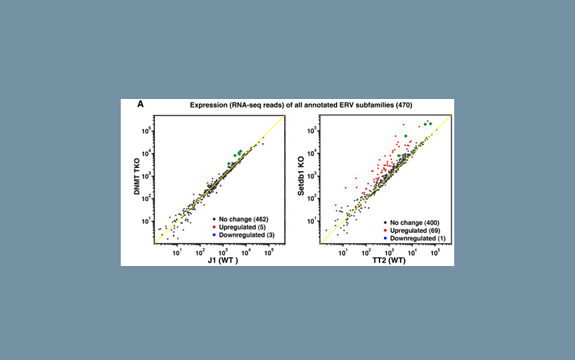
Abstract: DNA methylation and histone H3 lysine 9 trimethylation (H3K9me3) play important roles in silencing of genes and retroelements. However, a comprehensive comparison of genes and repetitive elements repressed by these pathways has not been reported. Here we show that in mouse embryonic stem cells (mESCs), the genes upregulated after deletion of the H3K9 methyltransferase Setdb1 are distinct from those derepressed in mESC deficient in the DNA methyltransferases Dnmt1, Dnmt3a, and Dnmt3b, with the exception of a small number of primarily germline-specific genes. Numerous endogenous retroviruses (ERVs) lose H3K9me3 and are concomitantly derepressed exclusively in SETDB1 knockout mESCs. Strikingly, ∼15% of upregulated genes are induced in association with derepression of promoter-proximal ERVs, half in the context of “chimeric” transcripts that initiate within these retroelements and splice to genic exons. Thus, SETDB1 plays a previously unappreciated yet critical role in inhibiting aberrant gene transcription by suppressing the expression of proximal ERVs.
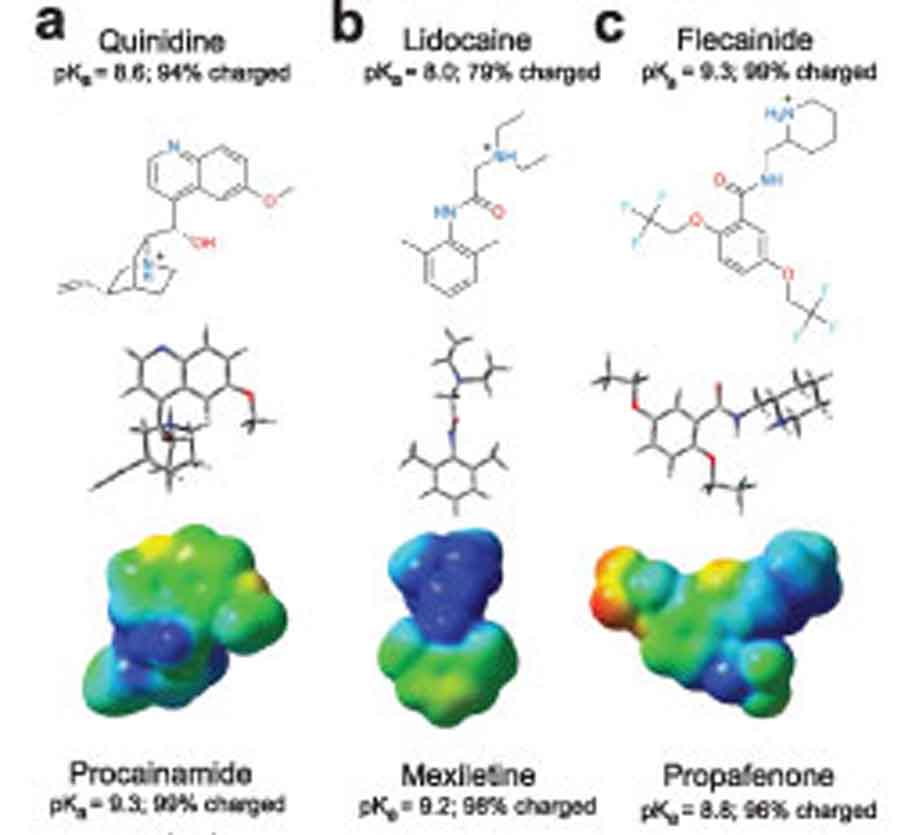
Abstract: Cardiac sodium channels are established therapeutic targets for the management of inherited and acquired arrhythmias by class I anti-arrhythmic drugs (AADs). These drugs share a common target receptor bearing two highly conserved aromatic side chains, and are subdivided by the Vaughan-Williams classification system into classes Ia-c based on their distinct effects on the electrocardiogram. How can these drugs elicit distinct effects on the cardiac action potential by binding to a common receptor? Here we use fluorinatedphenylalanine derivatives to test whether the electronegative surface potential of aromatic side chains contributes to inhibition by six class I AADs. Surprisingly, we find that class Ib AADs bind via a strong electrostatic cation–pi interaction, whereas class Ia and Ic AADs rely significantly less on this interaction. Our data shed new light on drug-target interactions underlying the inhibition of cardiac sodium channels by clinically relevant drugs and provide information for the directed design of AADs.
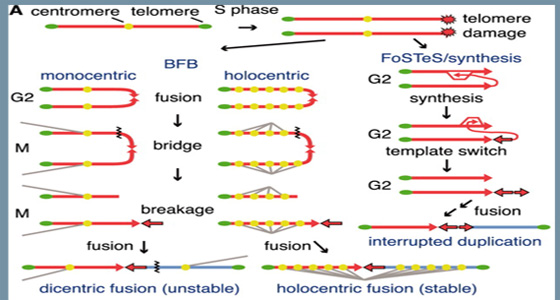
DNA Synthesis Generates Terminal Duplications That Seal End-to-End Chromosome Fusions
Authors: Mia Rochelle Lowden (Department of Genetics, University of North Carolina, Chapel Hill, NC),Shawn Ahmed (Department of Biology, University of North Carolina, Chapel Hill, NC), Stephane Flibotte, Donald G. Moerman, (University of British Columbia, Vancouver), Lab of Donald Moerman,Cell and Developmental Biology Research Group,Department of Zoology
Abstract: Understanding Chromosome Fusions Telomeres are DNA repeats that cap the ends of linear chromosomes to prevent them from being recognized as DNA damage. Loss of these caps can result in catastrophic end-to-end chromosome fusions, the repair of which frequently shapes the landscape of tumor genomes. Lowden et al. (p. 468 <http://www.sciencemag.org/lookup/doi/10.1126/science.1199022> ) looked at the consequences of end-to-end chromosome fusions in telomerase-deficient mutants of the nematode worm Caenorhabditis elegans, which, unlike humans, has holocentric centromeres that are stable after such fusions. Many of the chromosome aberrations involved complex fusion events—duplications, triplications, and nonduplicated sequences, possibly generated by DNA replication template-switching, as well as breakpoints that were sealed by microhomology—some of which have parallels to events seen in tumor development.
 Cellular Domains


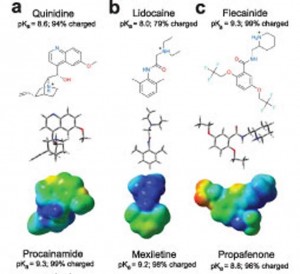 Molecular basis for class Ib anti-arrhythmic inhibition of cardiac sodium channels